
Aurora Horses And Humans Coaching
Aurora Horses And Humans Coaching
 Français
Blog : Horse Human Harmony
Beyond desensitization: Self-regulation in horses
I often hear of desensitizing to "everything". The idea of total desensitization... Let's face it, it's enough to leave one perplexed, even shocked! For my part, this vision of a horse completely indifferent to his environment seems not only utopian but also potentially detrimental to the well-being of our equids – and, dare I say, to our own relationship with them.
A little clarification: What is desensitization?
Desensitization is an active process, directed by humans, aimed at reducing or eliminating a horse's fear or avoidance reaction to a specific stimulus. This is achieved through gradual and controlled exposure to that stimulus, theoretically remaining below the animal's reaction threshold.
This is where my first reservation arises. How many videos have we seen where this fundamental rule is not respected? Forcing a horse, at the end of a taut lunge line, to endure what frightens him until he gives in is a horse that resigns, not a horse that collaborates.
Why do we seek to desensitize our horses?
The most frequent answer is that the horse has a natural propensity to flee from what worries him. And it is true that a horse that reacts to the slightest noise, movement, or new presence can be trying, even a source of danger.
But let's dig a little deeper: for what precise purpose do we desire this desensitization?
So that the horse no longer reacts to any stimulus?
To help the riders overcome their own fear of their horse?
To enable the horse to better manage potentially stressful situations?
(And if you have other motivations, feel free to share them in the comments!)
Desensitizing to "everything": Really?
The idea of wanting "the horse to no longer react to any stimulus" raises a fundamental question: are we seeking to make our horses indifferent to their environment as a whole? Is our implicit message: "No matter if something is alarming, you must remain impassive. The only acceptable response is the absence of reaction. Silence and submission"?
By acting in this way, do we not risk creating a passive horse, a being that no longer expresses his emotions? What is the cost? By suppressing his instinctive reactions, we could engender a shut down animal, emotionally anesthetized, and paradoxically, potentially more dangerous because unpredictable in his delayed reactions.
Excessive desensitization can even mask underlying problems. A horse that no longer shows a reaction may have learned to "shut down" emotionally, which is by no means a sign of well-being. Moreover, this absence of reaction could make him more difficult to detect pain or physical discomfort. A horse that does not express his discomfort will not alert us to his injury or illness, thus delaying timely intervention.
You may have succeeded in desensitizing your horse... Bravo! Until the day the pressure becomes unbearable and he "snaps," or he seems to go "crazy."
And what about the desensitization of the rider? "To help the riders overcome their own fear of their horse". Because let's not forget that it's a duo. If the rider is anxious, the horse will inevitably feel it.
The illusion of total desensitization
How can we hope to desensitize a living being to everything? Take the example of the horse desensitized to a red umbrella waved in a round pen. Are we certain that this horse will remain impassive in the face of:
An umbrella of another color (yellow, transparent...)?
The same umbrella presented by an unknown passerby on a path?
The same umbrella, manipulated in the same way, by the same person, but on a windy or hailing day?
Context is fundamental. A horse constantly maps his environment. He memorizes his surroundings in the smallest details, so desensitizing him to a specific object is limited because any change, even minor, can reactivate his distrust. Being accustomed to a stimulus in a specific context in no way guarantees the absence of reaction if other elements of that environment have changed.
Rather than suppressing reactions: Learning to manage them
What if, instead of wanting to control their reactions at all costs, we offered them the opportunity to understand their fears and master their reactions by themselves?
"To help the horses manage potentially stressful situations".
We have made this choice to give our horses the means to develop their self-confidence and their trust in us, to become balanced and fulfilled individuals. Self-regulation is precisely that: providing the horse with the necessary tools to manage his own stress, to make informed decisions in the face of what surrounds him. It is allowing him to flourish as a serene and reliable partner.
Making a horse confident is an approach initiated by humans, aimed at developing overall trust and the ability to understand novelty and his own reactions. This fosters genuine self-control, well beyond a simple learned absence of reaction. It is above all about building deep communication and mutual understanding.
Studies in equine ethology are clear: horses are intelligent and emotional beings. They need to understand their environment and feel safe. To do this, it is essential to give them the time and opportunity to express themselves, to reflect, and to assess the real danger of a threat.
Trust is built with patience, listening, and respect for their limits. It is strengthened by positive experiences and by valuing their initiatives.
This is the limit of desensitization and the strength of self-regulation, which also allows them to better manage their excitement and impulsivity.
And while the horse learns to self-regulate, the human does the same.
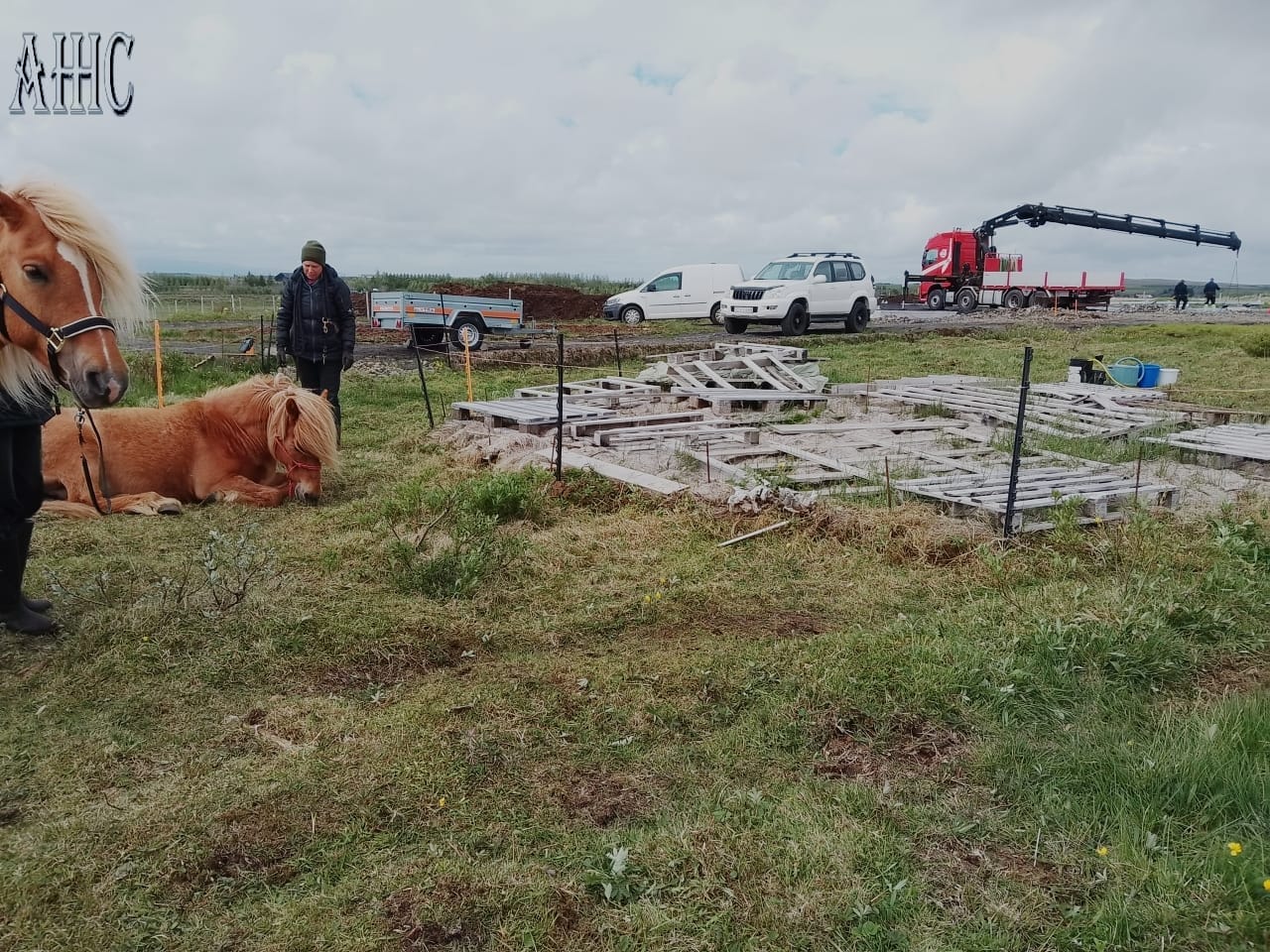
Human-horse well-being: A question of trust
While desensitization has its uses in specific contexts, cultivating trust is often much more beneficial for the long-term well-being of the horse and for the quality of the rider-horse relationship.
A horse that has learned to self-regulate will be infinitely more reliable than a horse that is simply desensitized. He will remain curious, reactive, and capable of making thoughtful decisions in the face of the unexpected, instead of freezing or exploding. He will also be better able to manage his excitement and impulsivity.
In summary, desensitization often focuses on modifying behavior, while the approach based on trust and self-regulation emphasizes managing the relationship and the horse's emotional state.
While desensitization can bring rapid results for specific situations, the development of trust offers a much more solid and lasting foundation for a harmonious partnership.
To discover more about self-regulation, sign up for our Facebook group and find our post titled "Self-Regulation in Horses".
👉 Stay connected for more advice and tips on equine training. Subscribe to our newsletter and follow us on social networks to not miss anything!
And if this article inspires you, please share it ! 🌟
SHARE


Stay connected !
Receive our exclusive tips straight to your inbox by subscribing to our newsletter over there 📩 !

This site is not affiliated with, endorsed by, or verified by Meta Platforms, Inc. or its subsidiaries (Facebook, Instagram, WhatsApp, etc.). The content of this site has not been reviewed by Meta Platforms, Inc. or its associated brands. "Facebook," "Instagram," and other mentioned product or service names are trademarks of Meta Platforms, Inc.