
Aurora Horses And Humans Coaching
Aurora Horses And Humans Coaching
 Français
Blog : Horse Human Harmony
One horse, one story: why all horses don't learn the same way
Every horse has a history that influences its learning. Their past, the experiences they've had even before starting training, play a major role in how they interact and progress. Too often, we expect a uniform response from them to the same exercises, the same methods, as if they all started on equal footing. But the reality is quite different.
* Other parameters, such as personality, also influence learning, but we will address them in another article.
Why horses don't start training equally
Even before we begin working with a horse, it has already lived through experiences that shape its way of learning and interacting with us. Some horses have grown up in a rich and secure environment, others have experienced deprivation, early separations, or even trauma. These differences influence their ability to concentrate, their way of managing stress, and their capacity to trust.

Rethinking "personal space": too rigid a view?
The idea of respecting personal space is often misunderstood and too rigid. We often hear that a horse shouldn't invade our space, that it should keep its distance, as if this automatically guarantees safety and respect. But this view is reductive and can be incompatible with the horse's real needs.
On one hand, the horse has its own personal space. Some need to be left to breathe, to have their "bubble" respected. Imposing constant proximity under the pretext of connection can be a source of discomfort, even stress. On the other hand, some horses need contact and proximity to feel safe and available for learning. Systematically denying them this approach under the pretext of "keeping your distance" is counterproductive because we push them away, we deny them our support when we want to establish a connection.
It's not because a horse stays away that it respects us more, and it's not because a horse seeks contact that it lacks respect. What matters is listening and responding to the horse's needs to establish a balanced exchange adapted to its emotional state.
Two horses, two approaches
The stories of Gladur and Aron illustrate well why a one-size-fits-all approach doesn't work.
🐴 Gladur preferred to keep his distance. Stopping further away, relaxing alone. Too much proximity could make him uncomfortable. He's a horse who likes clear boundaries and feels more at ease when they are well-defined.
🐴 Aron, on the other hand, needed contact. He would naturally come and lean against us. For him, it was a way to find comfort, to feel safe. By allowing him this space for expression, over time, he learned to relax alone, to be able to take his break further away.
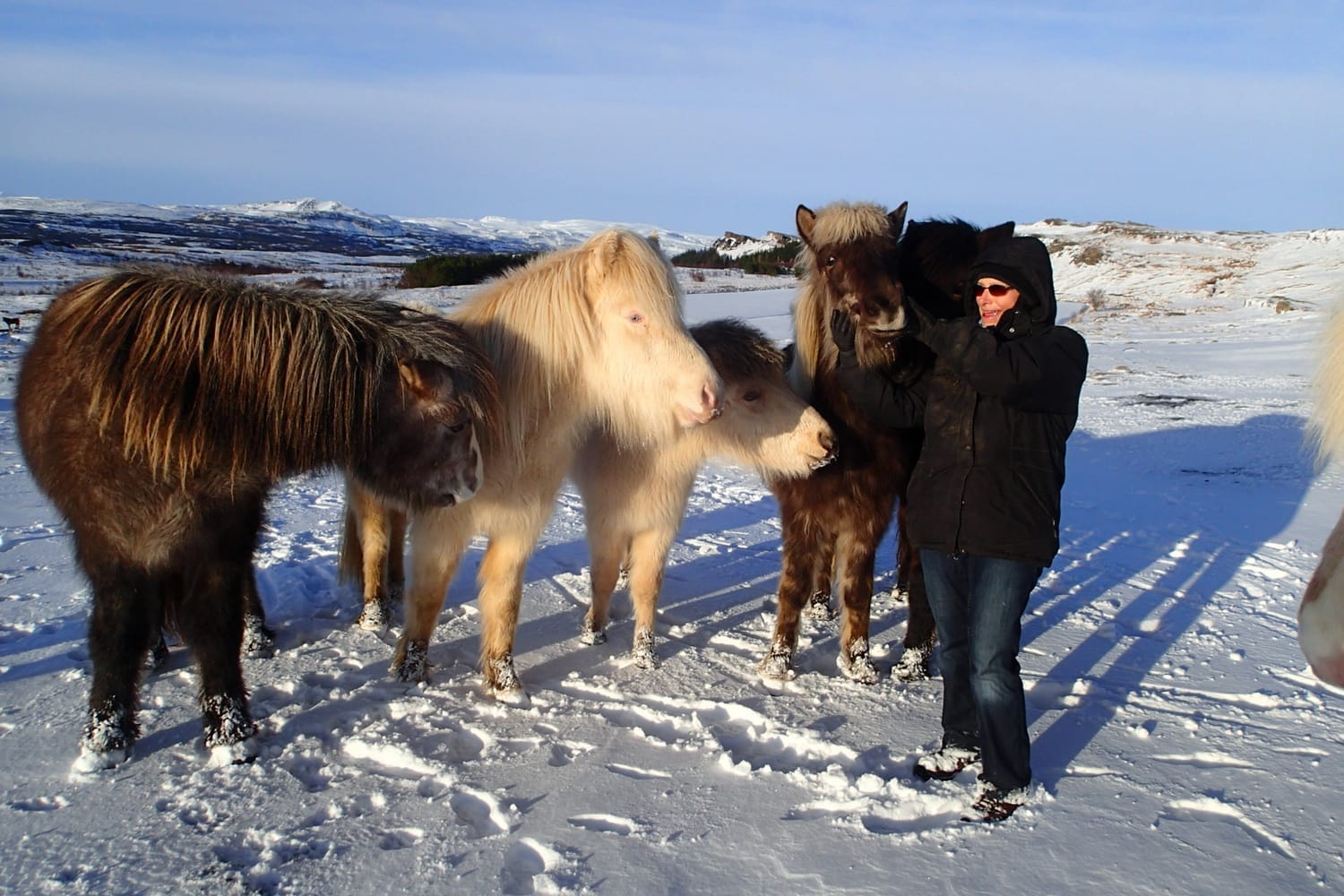
Today, both of these horses know how to relax both near and far from us. Each has evolved at their own pace, without unnecessary constraints, and it is precisely this ability to be balanced and confident, regardless of the space, that guarantees true safety, both for them and for us.
A constant evolution
Understanding your horse means first observing it and learning to interact with it in an adapted way. What it needs at the beginning won't necessarily be what it needs later.
Over time, its past will weigh less on its reactions, and its learning will allow it to gain confidence. What was once an essential need may become secondary, even disappear.
The important thing is not to impose a rigid framework, but to evolve with it, to accompany it at each stage so that it can progress with confidence and serenity.
🌟 Ultimately, isn't it the same for us? We move forward better when we are understood and accompanied according to our needs. By learning to listen to them, we not only shape better horses... but also better riders.
👉 Stay connected for more advice and tips on equine training. We're preparing a comprehensive course to help you better understand and accompany your horse. Subscribe to our newsletter and follow us on social networks to not miss anything!
And if this article inspires you, please share it ! 🌟
SHARE


Stay connected !
Receive our exclusive tips straight to your inbox by subscribing to our newsletter over there 📩 !

This site is not affiliated with, endorsed by, or verified by Meta Platforms, Inc. or its subsidiaries (Facebook, Instagram, WhatsApp, etc.). The content of this site has not been reviewed by Meta Platforms, Inc. or its associated brands. "Facebook," "Instagram," and other mentioned product or service names are trademarks of Meta Platforms, Inc.